Sometimes the cheaper job is the right job
Blown-in goes on the attic floor and costs a fraction of a sealed roof deck. Whether it is right for your house comes down to one question, and most companies will not ask it because the answer sometimes costs them the bigger sale.
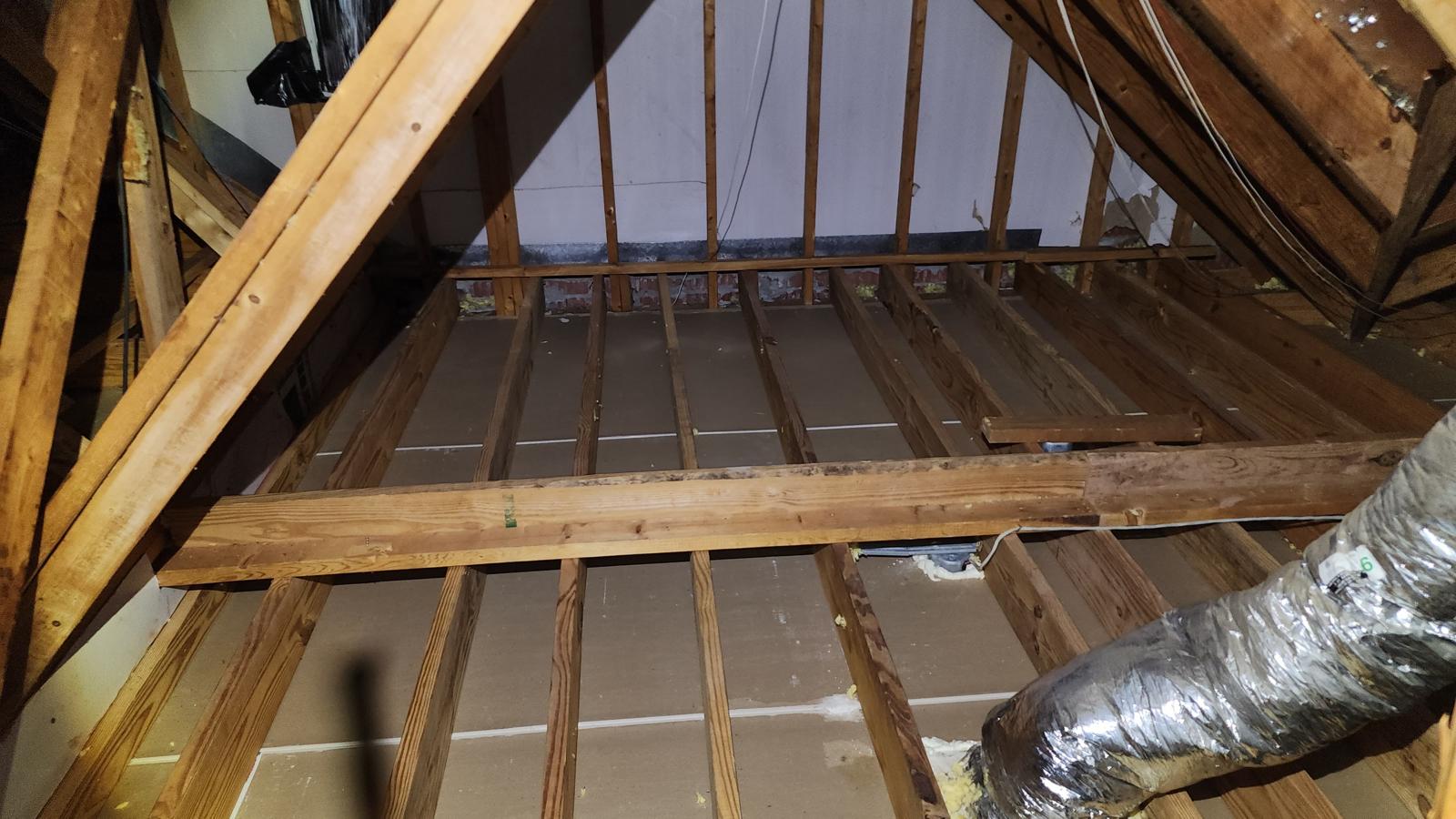
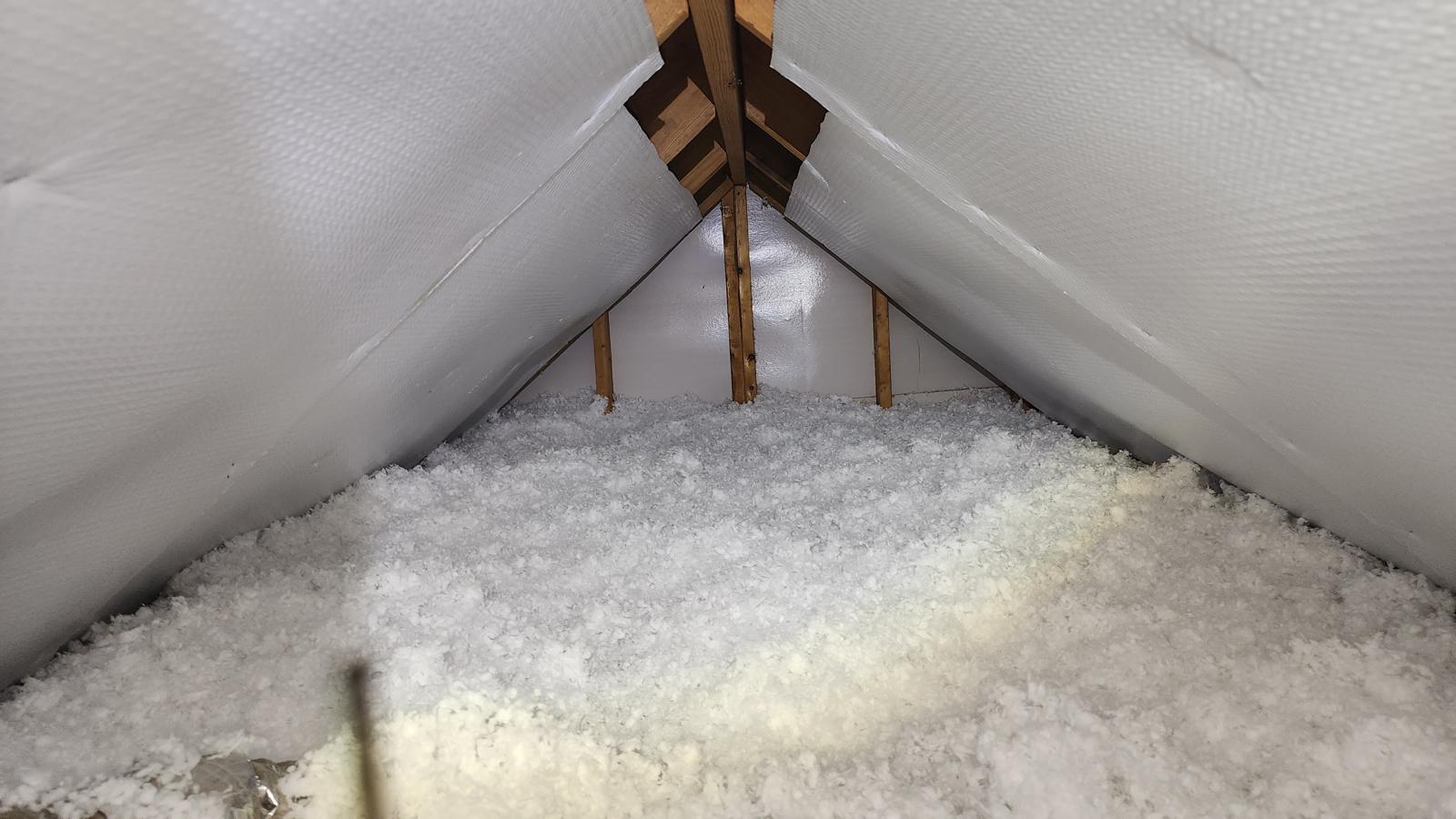
A Sugar Land attic, October 2026. Look at the ductwork in the first frame: it is sitting above the insulation line, in attic air, which is the problem floor insulation alone cannot fix.
The question that decides it
Where is your air handler and ductwork?
If the answer is a closet, a garage or a mechanical room, your equipment is already inside the conditioned space. Insulation belongs on the attic floor, and blown-in does that job well for a fraction of the cost of foam. That is a real answer and we give it regularly.
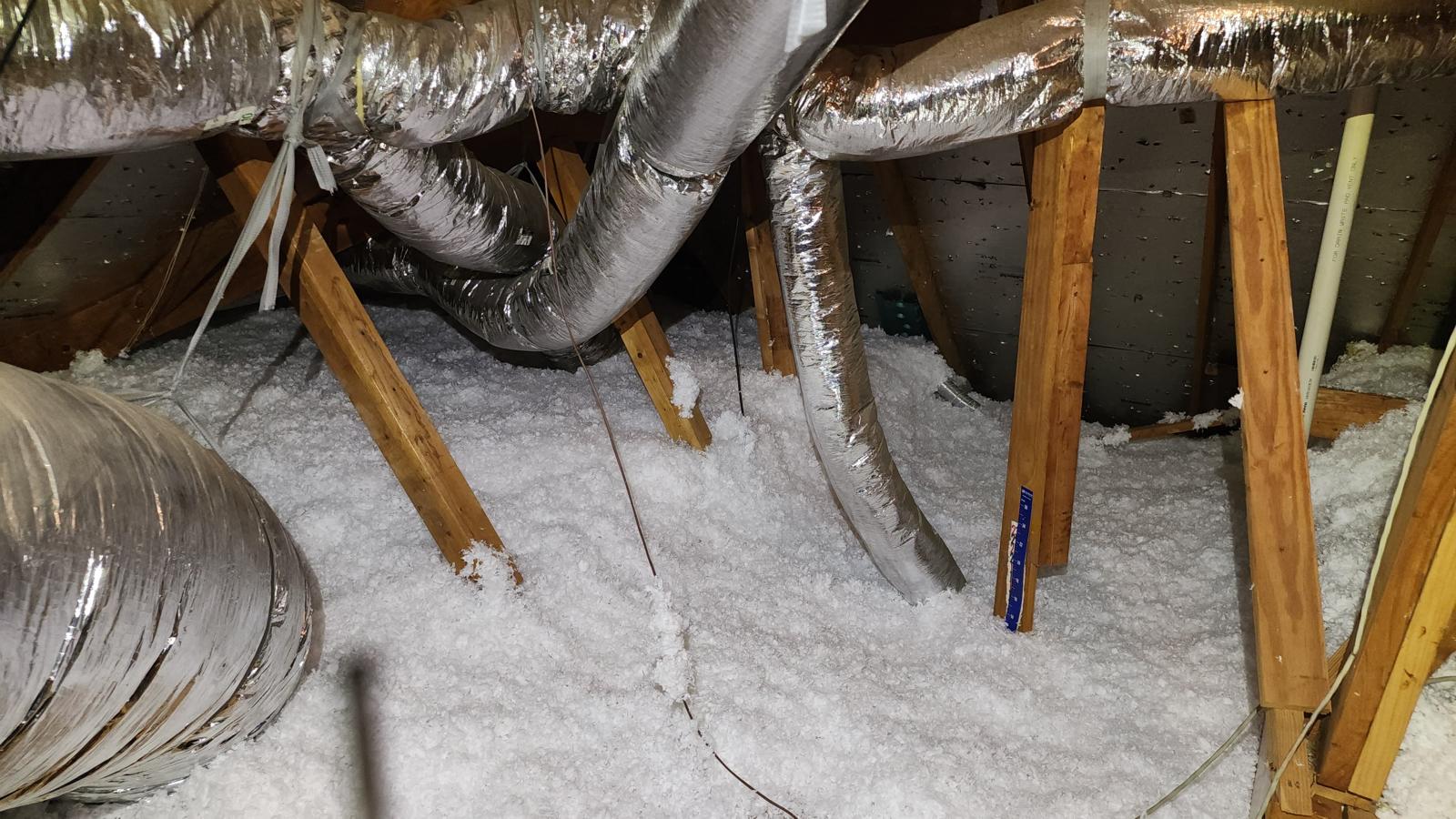
If the answer is the attic, which it is in most Houston homes, blown-in on the floor leaves your ducts above the insulation, still running through air that hits 140°F in August. The Department of Energy puts leaky attic ducts at 20% or more of a home's heating and cooling losses. Floor insulation does nothing about that, and we would rather tell you now than have you call back in two summers.
Go up and look, or send us a photo. It is a thirty second answer that changes which job you should be buying.
What it costs
Less than foam, and by a wide margin. Two reasons: the material costs less per square foot, and the attic floor is a smaller area than the pitched roof deck above it.
We do not publish a per square foot number for blown-in, because depth and prep move it too much to quote honestly from a web page. An attic that needs 16 inches over bare drywall prices differently from one that needs 6 inches on top of serviceable existing material, which prices differently again from one where the old insulation has to come out first. The assessment is free and the quote is written.
Depth is the whole specification
Blown-in fiberglass runs roughly R-2.2 to R-2.7 per inch. Houston is IECC Climate Zone 2A, where the prescriptive ceiling minimum is R-38 or R-49 depending on which code edition your city enforces. We cover which applies in what R-value Houston code requires.
| Target | Approximate depth |
|---|---|
| R-30 | About 11 to 14 inches |
| R-38 | About 14 to 17 inches |
| R-49 | About 18 to 22 inches |
That is deeper than most people picture, and it is deeper than what is in most Houston attics built before 2010.
Settling, and why old attics are shallower than they were
Loose fill settles. That is normal and the specification accounts for it by installing above the finished target. What it means for you is that an attic blown fifteen years ago is not at the R-value it was sold at, and topping it up is usually the cheapest useful thing anyone can do to that house.
Spray foam does not settle, because it bonds to the deck rather than lying on the floor. That is covered in open-cell or closed-cell for a Houston home.
When the old insulation has to come out first
Sometimes the first half of the job is removal. Wet material, rodent damaged material, or anything contaminated comes out before new material goes in. Blowing fresh insulation over a problem buries it where you cannot see it and cannot reach it.
Removal is priced as its own line, not folded into the number and hidden. On the rodent question specifically, foam and loose fill are not pest control and the order of operations matters.
Where we work
Across Greater Houston, and a lot of this work is in the surrounding areas: Katy, Sugar Land, Cypress, Spring, The Woodlands, Conroe, Tomball, Pearland and the rest of the service area.
What to do next
Find out where your ducts run, then book the free assessment or text a photo of the attic to (281) 703-2700. If blown-in is the right call we will say so, and if it is not we will say that instead.
Blown-in questions
Is blown-in cheaper than spray foam?
Substantially, usually a fraction of the cost per square foot. It also covers a different area: blown-in goes on the attic floor, which is a smaller surface than the roof deck above it. Two reasons the number is lower. We price it after seeing the attic, because depth and removal drive it more than square footage does.
How deep does it need to be?
Blown-in fiberglass is roughly R-2.2 to R-2.7 per inch, so reaching R-38 takes somewhere around 14 to 17 inches and R-49 takes around 18 to 22. That is a lot of depth, and it is why the rulers get stapled to the joists before we start. We certify the installed depth and R-value in writing.
Does it settle?
Loose fill settles over time, which is why installed depth is specified above the finished target. Spray foam does not settle because it bonds to the deck. If your attic was blown twenty years ago, what is up there now is shallower than what was paid for.
Can you just add on top of what is already there?
Often yes, and it is the cheapest thing we do. Not if the existing material is wet, rodent damaged or contaminated, because covering a problem seals it in where nobody can see it. We tell you which case you are in before quoting.
Will it help if my ducts are in the attic?
Less than you want it to. Insulation on the attic floor leaves the ductwork above it, still sitting in attic air that reaches 140°F in August. That is the case a sealed roof deck is built for. We will say so rather than sell you the cheaper job twice.